

TL;DR PRP takes two to six weeks to show early results, though the full answer depends on your treatment area. Skin responds fastest, joint relief builds across several months, and hair restoration takes three to six months to become visible.
That gap between treatment and result is where most patients struggle. You have invested in something promising, weeks pass, and the mirror looks unchanged.
Doubt creeps in well before the process has finished. Knowing what should happen, and when, makes the wait much easier to trust. Here is the full timeline, area by area.
Why Does PRP Take Time to Work?
PRP starts with your own blood. We draw a small sample, then spin it in a centrifuge until the platelets separate and concentrate. Those platelets carry growth factors, and growth factors are the reason PRP works at all.
Here is the part most people miss. Growth factors do not repair anything themselves. They send instructions. Your cells receive the signal, then begin building new tissue at the treated site.
That building takes real time.
Collagen forms slowly in the skin. Hair follicles wake on their own cycle. Joints settle as inflammation quiets over weeks. Compare that to a filler, which adds volume the moment it is placed. A steroid injection works fast too, calming a joint within days. PRP behaves differently because it doesn’t fill or mask anything.
At MarSha MedSpa, providers set this expectation during your consultation. You are not buying an instant result. You are starting a repair process your body completes on its own schedule.
PRP: How Long Does It Take to Work? Timeline at a Glance
Timelines differ by treatment area, so the answer depends on where the plasma goes. Use the table below to find your treatment, then read across to see what to expect at every stage of recovery.
| Treatment | First 72 hours | Weeks 1-4 | Months 1-3 | Peak Results |
| PRP/PRF facial injections | Mild swelling, tenderness, occasional bruising | Swelling settles, skin looks fresher and better hydrated | Collagen builds, hollow areas gradually fill | 3–6 months after your final session |
| PRP microneedling | Redness like a mild sunburn, then light flaking | Early glow by week one, smoother texture by week four | Tone evens out, fine lines and scarring soften | 4–6 weeks after one session, 3–6 months after a series |
| PRP hair restoration | Scalp tenderness, mild swelling at injection sites | Temporary shedding is normal, shedding often slows | Existing strands thicken, new growth begins quietly | 3–6 months, with gains continuing near the one-year mark |
| PRP joint injections | Soreness or a short flare as healing begins | Discomfort eases gradually for many patients | Pain and mobility improve steadily week by week | Around 3 months, with relief often lasting 6–12 months |
These ranges reflect typical patient experience, not a guaranteed outcome. Your age, platelet quality, and the severity of your concern all shift the pace.
Most PRP treatments also work as a series rather than a single visit. Your timeline restarts and builds with each session, which is why the final result arrives later than the first.
The First Signs PRP Is Working
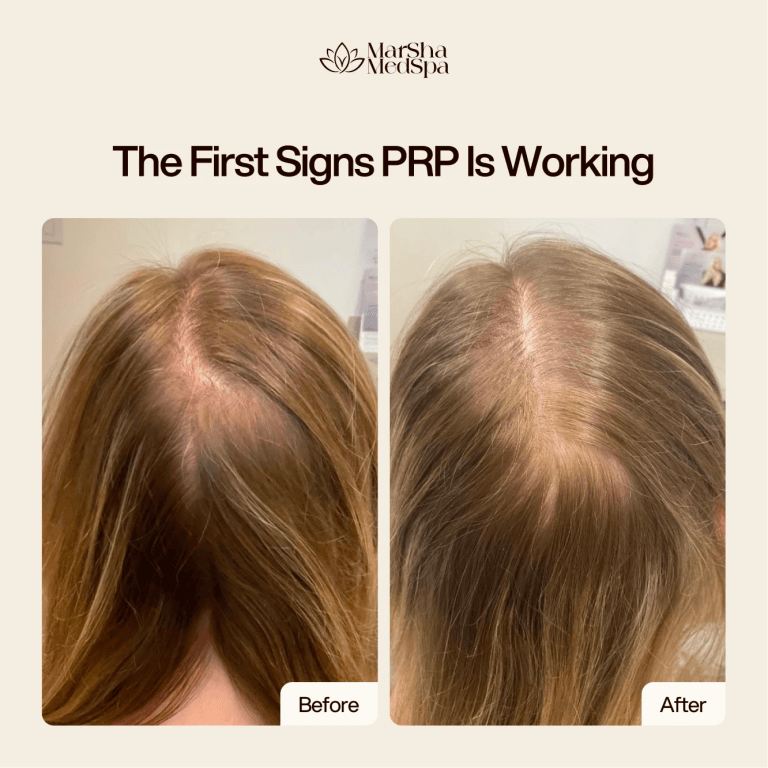
Patients often ask, how long does it take PRP to work before anything shows? The earliest evidence arrives sooner than most expect, though it is rarely visual.
Soreness, mild swelling, or a temporary increase in pain in the days afterwards signals your healing response starting. For joint patients, that reaction is normal and frequently marks the beginning of repair. Nothing has gone wrong.
Other clues follow area by area. Skin can feel firmer and better hydrated well before it looks different. Scalp shedding slows. A stiff knee or shoulder moves more freely while pain still lingers.
Seeing no change in the mirror through weeks one to three is expected, not disappointing. Gradual progress hides in plain sight, which is why we take standardized photos at set intervals. Those images give you proof that daily glances never will. A follow-up review compares them with how the treated area feels now.
PRP by Treatment Area: Sessions, Spacing and Why Timing Differs
Timelines make more sense once you know the protocol behind them. How long does PRP injection take to work is shaped by session count, spacing, and what the treated tissue can realistically do. Here is each area explained.
PRP and PRF Facial Injections
For under-eye hollows and nasolabial folds, MarSha typically uses PRF rather than PRP. PRF releases growth factors for up to a week after injection. That slower release is thought to produce more robust, longer-lasting volume.
Most patients need two to three treatments, spaced eight weeks apart. The amount of existing volume loss determines the exact number. The eight-week gap is deliberate, since collagen needs that long to organize between sessions.
Nothing here is being filled. Your body builds the volume, which is why the wait exists. Annual maintenance keeps that stimulation going as natural collagen production declines.
Every appointment begins with a Medical Provider reviewing your history and CBC levels. Learn more about PRP and PRF injections.
PRP Microneedling
Treatment pairs your plasma with the SkinPen, an FDA-cleared microneedling device. The device creates controlled micro-channels, then PRP is applied so growth factors reach deeper layers.
The session itself is short, usually 15 to 30 minutes. Most protocols run three sessions spaced four to six weeks apart.
That spacing matters more than people expect. Each round of collagen remodeling needs time to complete before the next stimulus lands. Booking sessions closer together does not speed anything up.
Your skin also heals on two separate clocks here. Surface recovery from the needling finishes quickly. The collagen work underneath continues long after redness fades, which is why the finish line sits further out. Explore PRP microneedling.
PRP Hair Restoration
Scalp treatment is the longest wait of the four, and biology explains why. PRP works by increasing blood flow to follicles and extending the anagen, or active growth, phase.
You cannot see that happening. Hair grows roughly half an inch each month, so even successful follicle activity takes time to surface. Treatment usually involves three sessions spaced about a month apart, with maintenance around every six months.
This approach suits androgenetic alopecia and similar thinning patterns. Results depend on treating weakened follicles rather than those that are gone.
Starting earlier generally produces better outcomes than waiting. Dormant follicles respond. Fully scarred ones do not. See PRP hair restoration details.
PRP Joint Injections
Joint PRP suits knee osteoarthritis, tennis elbow, golfer’s elbow, and shoulder concerns including rotator cuff injuries. Chronic joint pain and sports injuries also respond well.
The appointment takes under an hour from blood draw to finish. Most patients return to normal activity within a day or two. Protocols commonly involve one to three injections spaced four to six weeks apart.
Worth being clear about what PRP does here. It calms inflammation and supports tissue repair, easing pain and improving function. It does not rebuild worn cartilage.
That distinction shapes your expectations honestly. You are treating the joint environment, not reversing structural wear.
What Makes PRP Work Faster or Slower?
Two patients can follow identical protocols and still progress at different rates. Several factors shape how quickly your body responds to treatment, and a few of them sit entirely within your control.
- Age and platelet quality. Your plasma reflects the body producing it, so general health influences how strongly growth factors signal repair.
- CBC levels. MarSha reviews these before treatment, since low platelet counts change what PRP can realistically deliver.
- Severity of the concern. Early thinning responds faster than advanced hair loss, and mild joint wear improves sooner than moderate arthritis.
- Smoking and circulation. Restricted blood flow limits how efficiently growth factors reach treated tissue.
- Anti-inflammatory medications. These suppress the exact healing response PRP depends on, so your provider will advise when to pause them.
- Completing your full series. Stopping early interrupts the process before your body finishes the work it started.
Most of this list is manageable. Aftercare, medication timing, and finishing your sessions all sit in your hands, and each one moves your timeline in the right direction.
PRP Treatment at MarSha MedSpa in Garner, NC
A realistic timeline depends on realistic preparation. PRP is only as effective as the screening, handling, and expectations behind it.
At MarSha MedSpa in Garner, NC, a medical provider is on site for every PRP appointment. Your consultation reviews medical history and CBC levels before anything is scheduled, because plasma quality determines what treatment can achieve.
You also leave knowing what to expect and when. We set timelines honestly at the start rather than promising them and revising them later. Standardized photos taken at set intervals give you evidence of progress during the weeks when the mirror shows little.
If joint pain, thinning hair, or volume loss has you considering PRP, book a consultation and find out whether you are a candidate.
Frequently Asked Questions
How long do PRP injections take to work?
Most patients notice early changes within two to six weeks. Facial and microneedling results appear soonest, joint relief builds over several months, and hair takes the longest. Your treatment area determines the pace more than anything else.
How long does it take for PRP injections to work on hair?
Visible results appear within three to six months, with improvement continuing near the one-year mark. Reduced shedding often comes first. Hair grows about half an inch monthly, so follicle activity takes time to surface.
How many PRP sessions will I need?
Most treatments work as a series rather than a single visit. Facial injections usually require two to three sessions eight weeks apart. Microneedling, hair, and joint protocols typically involve one to three sessions, spaced four to six weeks.
How long do PRP results last?
Joint relief generally lasts six months to over a year. Facial volume benefits from annual maintenance, while hair results are typically maintained around every six months. Severity and individual response both affect duration.


